NEWS
Exclusive Interview with Torbj?rn Kvasb?, Honorary President of IAC: Jingdezhen Biennale, a Crucial Milestone for Young Artists to Leap Over
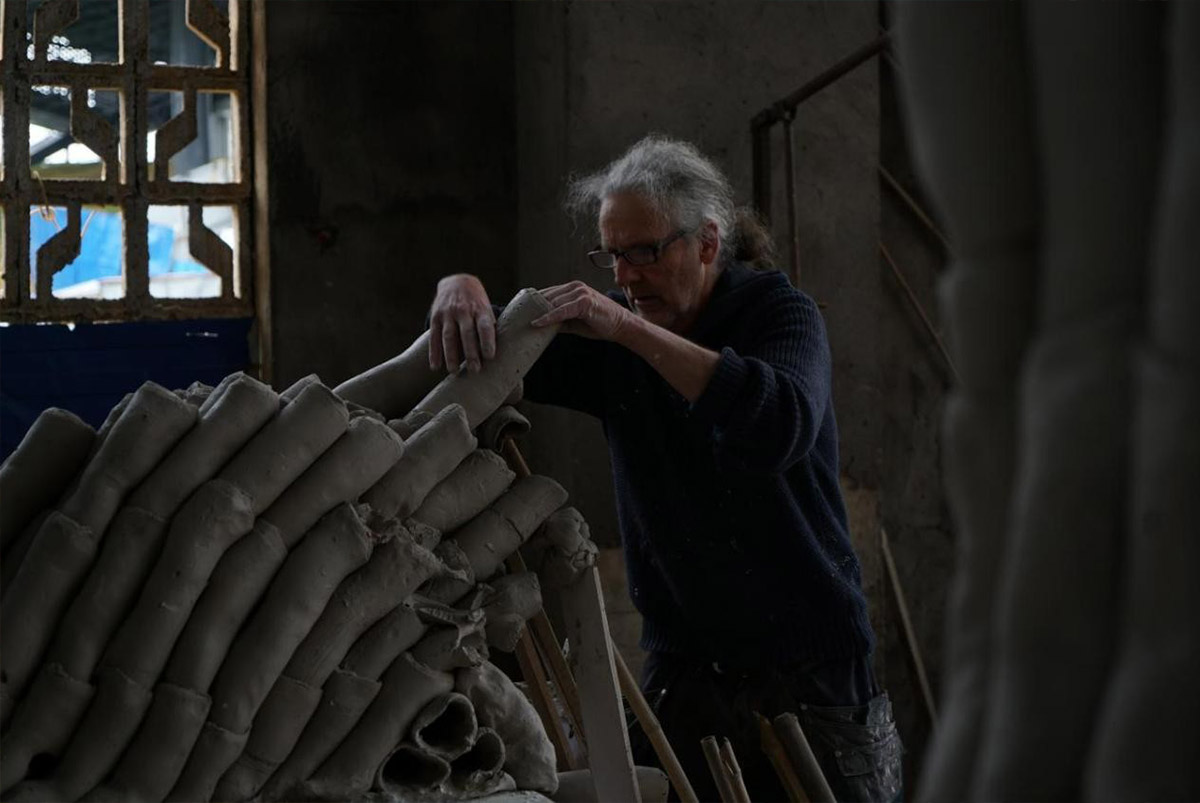
Torbj?rn Kvasb?
Honorary President of the International Academy of Ceramics (IAC)
Key participant in Norway's contemporary ceramic art movement in the 1970s
Q: Yu Lingna
A: Torbj?rn Kvasb?
Q: The Jingdezhen International Ceramic Biennale has been successfully held twice. As one of the chief curators, what are your observations and evaluations?
A: The Jingdezhen International Ceramic Biennale has become one of the most important biennales in a short period of time, especially significant for young ceramic artists. It serves as a vital window for international ceramics to enter China and for Chinese ceramics to step onto the world stage. Impressive in scale due to the large number of participants, it reflects professional international standards both in the quantity of exhibited works and the exhibition presentation—this is the reputation it has established.
For young and promising ceramic artists, especially Chinese ones, the biennale is extremely important. Many young people now study ceramics and aspire to become professional artists. They apply to participate because they never know how judges will perceive their works—judges may see their creations as interesting expressions of contemporary youth. That’s why I always encourage everyone to apply for international exhibitions.
Additionally, the average age of applicants is decreasing, with many students participating, which brings great joy to those of us who have worked in the field for years. However, the industry faces a brain drain issue. Most applicants also pay attention to environmental and sustainable development issues. Young artists reflect their thoughts on production and the future in their works or application materials, and their background stories in engaging with ceramics are also very interesting.
Q: The 2026 "Future of Ceramics" Jingdezhen International Ceramic Biennale will be held concurrently with the 52nd Conference of the International Academy of Ceramics (IAC). What does this mean for participating artists?
A: The 2026 Jingdezhen International Ceramic Biennale will open at June 29th.This scheduling is thanks to Mr. Lv Pinchang—he not only facilitated the link between the IAC Annual Conference and the biennale but is also the core planner of the Jingdezhen Ceramic Biennale, making tremendous contributions to promoting international exchanges between Chinese and foreign ceramic circles.
On the positive side, the linkage of these two major events provides artists with more opportunities to participate in industry activities, but it also poses a significant challenge. The number of ceramic artists worldwide is inherently limited, and many artists cannot participate due to issues such as high transportation costs and logistical difficulties caused by the large size of their works. I believe the relevant organizers should strengthen collaboration and jointly coordinate a staggered schedule to allow more artists to participate in both events.
Furthermore, being shortlisted for the biennale itself is an important career boost—artists can include the exhibition experience in their resumes. Winning an award not only enhances international visibility but also accumulates important industry capital for one’s artistic career, and the prize money provides practical support for creative work.
Q: When you create, your fingerprints remain on the clay. What will young artists leave behind when participating in the biennale, and what can they gain from it?
A: Clay "absorbs" all operations. The wonderful property of soft clay allows creation traces to be permanently preserved after firing, becoming a historical record of that moment and an important document reflecting contemporary history. Once the creation is completed, it serves as an excellent record.
Therefore, when young artists participate in the biennale, they leave behind the creation traces and contemporary reflections embodied in their works; what they gain is exhibition opportunities, industry recognition, and inspiration for their own creation. (My best advice is to participate in more exhibitions.)
Speaking of gains, participating in the exhibition allows young artists' works and names to be promoted globally, and the communication effect of social media adds important weight to their resumes.
As for what they leave behind, the creations of young artists themselves are footnotes to the times. Currently, the average age of applicants is decreasing, and many students actively sign up. Their works often reflect concerns about issues such as the environment and sustainable development, and they also elaborate on the underlying logic of their creation in the application materials. All these inject vivid contemporary reflections into the biennale.
I have always advised all young creators to actively apply for various international ceramic exhibitions. After all, judges have diverse aesthetic orientations—perhaps your work will resonate with the judges and become a typical case demonstrating the expression of contemporary young ceramic artists.
Q: As the Honorary President of the International Academy of Ceramics (IAC), you have witnessed the evolution of many top international ceramic biennales. Compared with long-established events such as the Faenza Biennale in Italy, the Mino International Ceramic Festival in Japan, and the Gyeonggi International Ceramic Biennale in South Korea, what is the core competitiveness of the young Jingdezhen Ceramic Biennale in your opinion?
A: The Jingdezhen Ceramic Biennale has not been founded for long—even with the 2026 exhibition, it will only be held three times. However, it has grown into a highly influential international ceramic biennale in a short time, especially as an important exhibition platform for young ceramic artists. It is not only a window for the international ceramic community to understand China but also a bridge for Chinese ceramics to go global—its exhibition scale, number of works, and professional presentation are highly advantageous, and it has already established a reputation as a professional international biennale.
As an emerging biennale, one of its core competitiveness lies in its ability to learn from the experience of other mature exhibitions, establish a sound operational system in a short time, and efficiently handle the entire process of work solicitation, evaluation, and exhibition presentation. This is quite rare for a young international exhibition.
Q: You have proposed that "tradition is something ongoing and constantly changing." Which path—taking tradition to the extreme or breaking with tradition—is more in line with the future of ceramic art?
A: For serious ceramic artists, they will continue to delve into materials, adhere to experimental exploration, maintain creative passion and curiosity, and will not deliberately dwell on labels such as "innovation," "breaking tradition," or "establishing tradition." These breakthroughs and inheritances in creation will occur naturally as artists maintain a focused creative state. In fact, the core is not whether to continue or break with tradition in form, but whether creators can stay true to themselves—"being authentic" is itself a highly unique expression.
As judges, we value the uniqueness of "the self" conveyed in the works, such as the creator’s in-depth reflections on the times they live in, life experiences, traditional values, and international situations. In short, I am looking for unique and profound personal expressions, nothing more.
In addition, the creative content and the historical accumulation behind it are important. If one does not face oneself sincerely, creation will hit a dead end.
Q: What do you think about AI ceramic creation? Do you recognize the artistic value of such works?
A: The core criterion for me to evaluate a ceramic work is whether it can establish a deep connection with the audience—when the audience sees the work, can it trigger reflections on their own lives? This connection is built on the artist’s infusion of their own emotions and thoughts into the work. If AI ceramic creation can achieve this deep emotional and ideological transmission, then it possesses corresponding artistic value; on the contrary, if it is merely a pile-up of techniques, it can hardly be said to have true artistic significance.
Q: You have proposed that "ceramic art should become a contemporary representative of the spirit of the times." What do you think is the biggest challenge facing the global ceramic art industry today? How will the 2026 Jingdezhen Ceramic Biennale respond to this challenge?
A: First, we need to distinguish between the ceramic industry and ceramic art: the ceramic industry is facing severe problems such as serious pollution, high costs, and shrinking market demand; while ceramic art itself has the attribute of circular economy, the global environmental crisis has also profoundly affected the field of ceramic art, which is also the core challenge of the industry today. Many young ceramic artists now pay great attention to sustainability issues. They practice environmental protection concepts in their creation, such as adopting low-temperature firing technology and using non-toxic materials, and their works have become powerful responses to contemporary issues. The 2026 biennale will continue to focus on such creations. Ceramic art should inherently be a voice of the times, and this is the core direction we hope to see more of in the exhibition.
Q: What new faces or new ideas do you hope to see in next year’s biennale? What expectations do you have for the future of the Jingdezhen Ceramic Biennale and ceramic art?
A: I hope to see more young people who have never applied before, and I also hope that artists who have participated in the previous two sessions can make new breakthroughs, continue to explore, and submit their works. However, as a judge, I personally pay more attention to works that can bring new knowledge and new information—in short, I look forward to "innovation."
For the future of the biennale, I hope it can break the predicament of homogenization—many international biennales now tend to be similar in their call for submissions and participating groups, lacking new ideas. I believe future biennales must make more changes, trying something different every two years, such as adopting an invitation system, strengthening control over exhibition content, and creating differentiated themes and content for each session. As for the future of ceramic art, I hope creators can take the initiative to speak out, convey their reflections on the world through their works, strive to increase the international exposure of their works, and establish their own creative discourse power. After all, if you do not control the direction of your creation and life, you will be led by external forces.
Q: Finally, please issue an invitation to artists around the world to encourage them to actively participate in the Jingdezhen Ceramic Biennale.
A: I hope artists from all over the world will actively participate—your works and names will be spread across the globe. The communication effect of social media is excellent, which is also a major advantage attracting everyone to sign up. Because participating in the Jingdezhen International Ceramic Biennale, like participating in other world-renowned biennales, can bring widespread attention.